
Letting the body speak- establishing the legacy of the Black performers body as archive
I began to consider archiving when I realised how much I had lost.
Hell of an opening statement huh?
Well, it’s the truth, and I’ve always felt that’s the best place to start.
I’m a mixed Black, queer, diaspora kid that never quite fit in with my ‘own’…Or should I say, the expectations from either side of the aisle that seem to consistently insist that I conform to a fixed cultural identity, whether ethnic or sexual, firmly entrenched in their beliefs that the ability to go with the crowd is a choice…
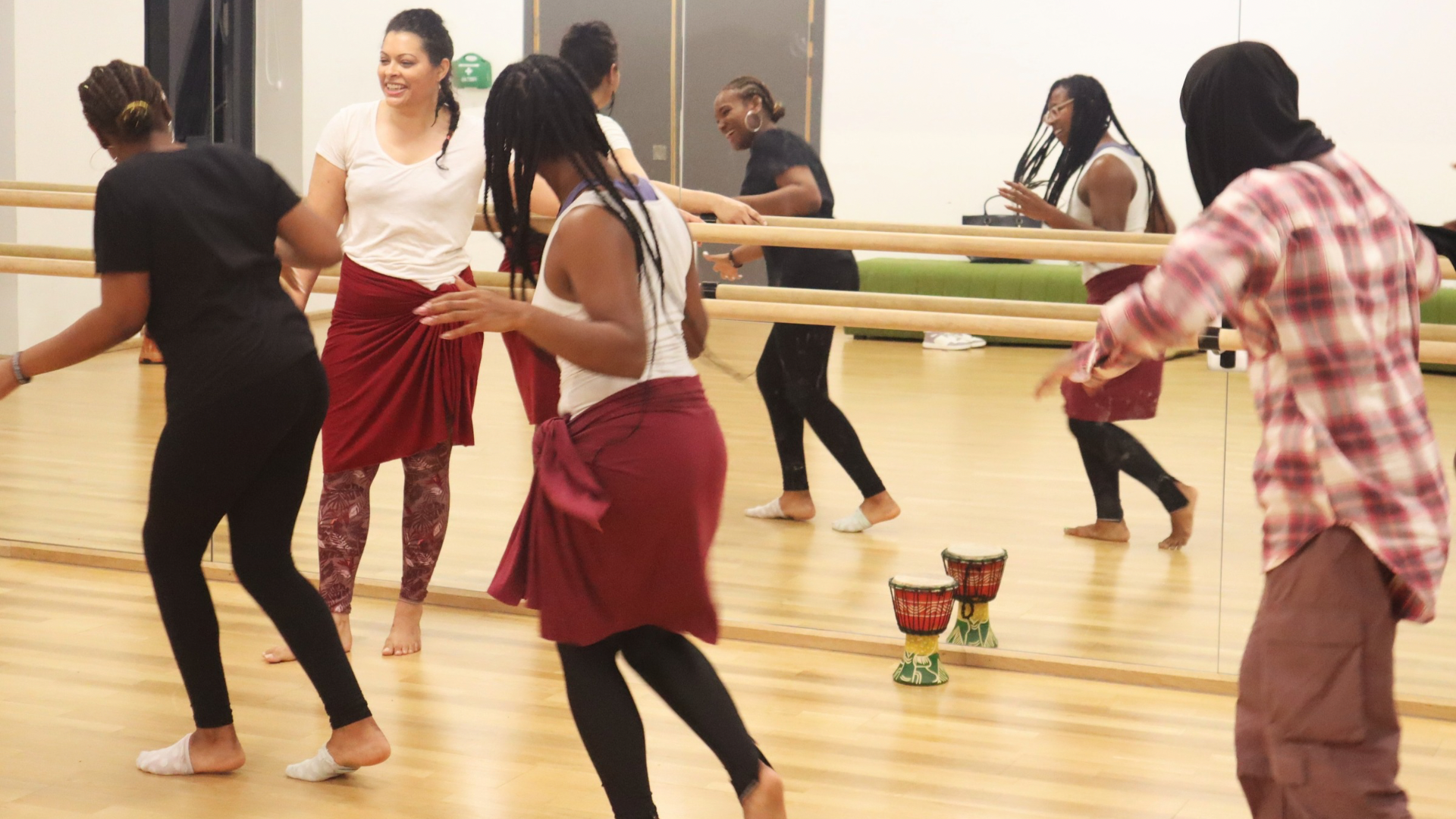
Warrior Women Like Me: Youth WarriorsTM (Credit: Titun Aiye a.k.a. Lynx K)
I’ve often been questioned about the nature of my work as an artist and its visceral and personal nature - it is important to understand what is safe and appropriate to share, especially as a performer. I’m currently struck by the reality that there are no formal structures in education or art school that teach us this. No care-taking processes that teach us how the body is an archive or what to do with our nervous systems when they speak to us with such clarity and urgency on a regular basis, especially regarding race, legacy, and issues of belonging.
Like many who choose this work, the memories I call mine, prohibit me from ignoring the rich tapestry of experiences I’ve accumulated over the years, almost all, passed down to me by the hands of my matriarchs.
Whether from my mother, who couldn’t bear to be a nurse because she could see so much unkindness around her and wouldn’t bend to it - or the system - that would force her to ignore people’s pain.
From my aunty, who was the first amongst my Mauritian, nationalised British family, to identify as a Black woman - since the UK landscape would not see her as anything other…
Or my grandmother, who seems about as far removed from the exotified stereotype of an island woman that many associate with Mauritius, but through her cooking, charm, and heavy chested laugh, would never let me forget my heritage.
These women were all gone within the space of ten years; one after another, like a chain of dominoes, they walked on…How was I supposed to hold that, and keep their memories alive?
And further, prepare for future losses whilst documenting the joy and the validity of our experiences?
The answers came when Renaissance Studios asked us to bring in pictures and get creative with the stories around them at the end of 2024, as part of their collaboration with Film London on the first round of the ‘Undocumented’ Screen heritage ambassador programme.
I chose a picture of my mother in her nurse's uniform, it was a picture of her and my uncle being photographed, a curious perspective indeed...That series of workshops gave birth to my first archival film Standing in the Sun (Barnes, 2024)which was selected for a screening at The New Black Film Collective in 2025. That relationship in turn, presented me with the possibility of travelling to the Cinedance film festival in Amsterdam this year; the world's biggest dance-film festival. As a multi-disciplinary artist and movement director, a week full of dance-film screenings alongside co-creative discussion was a piece of heaven!
In a world that seems obsessed with commercialising healing, movement and vernacular practices, the idea of a dance-film archive that reflects lived experiences in the Black community, world-wide, feels important. And yet, speaking with my new Dutch friends and again with my UK colleagues for our Custodianship panel, the presence and acknowledgment of the body as archive is distinctly faint.
We examine objects, discuss documents and footage and learn how to preserve and categorise these, but still, fail to recognise the depth and wisdom present in our bodies, and more importantly how this might bring us together as a form of communal resistance and embodied archival practice.
The use of convenient technology (my phone) and the ability to engage with archival practice as a filmmaker drew me into archiving, but it is my practice as someone working with the body that is keeping me here. As a type-1 diabetic looking back on my career as an artist of 33 years standing, I have no choice but to consider the impact performance has had on my body. It is this capacity to reflect, distil knowledge and pass it on that makes me and my human body so incredibly unique in its capacity to process emotion and be in the act of listening and responding.
For me, it seems inconceivable that the vehicle that has allowed us to endure, witness and grow through, so many events, happenings and transitions, ‘the body’, both collective and individual, is still not given a proper place in the archival landscape.
The biggest question coming from my experiences as an archivist so far, has been around how I might be able to support the archival practice of performance documentation. From ways that use artist-friendly and participatorymethods of embodied integration to teach others to do this, to furthering the care of our bodies and works, and helping funders grasp why this is so important.
In the end, when the paper, the film, the slides and the technologies fade, what remains is you, me, us. The veins, the blood and the breath. This might be considered the last piece of decolonial practice...Valuing the living and the qualitative as documentation, the bodily histories as the ultimate forms of embodied knowledge.
I began my journey as an archivist when I realised how much I had lost.
Now, I stand strong in the present, as I realise how much I have - and what is still left to be gained.
Learn more about Ariane Barnes and her work with the Undocumented project.